


The Carrot Caper
A Boomer’s childhood was filled with more than its fair share of myths. The TV show Leave it to Beaver was a classic one. We grew up thinking all parents were like Ward and June, yet couldn’t understand why ours weren’t. We had heroes like Mickey Mantle, yet grew up to learn he was an alcoholic. Coaches said athletes had to stay away from smoking, drinking, and chasing women. That seemed like the standard behavior of the day. Politically, there was the Domino Theory which justified the Vietnam War. Then of course, if I ate my spinach, I’d get forearms like Popeye. No wonder Boomers were perceived as the protest generation ― they were fed enough myths to make reality seem like fiction.
One of my favorites was the carrot myth. If you’re a Boomer, in your childhood you were told to eat your carrots because they’d help you see better at night.
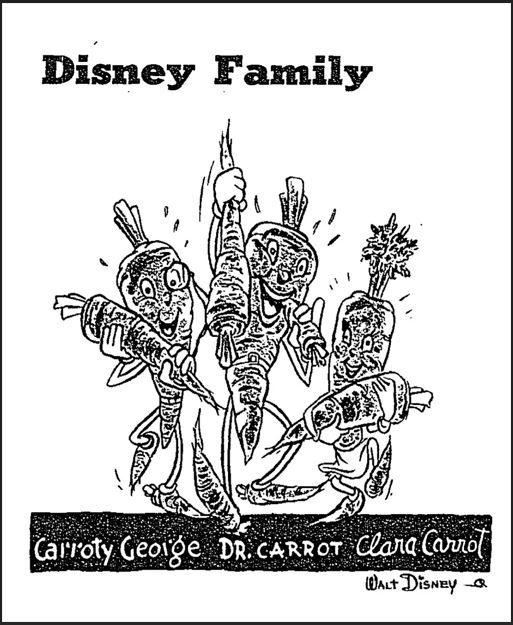
While carrots are good for your eyes because they contain beta-carotene, which supports low-light vision, and prevents night blindness, they will not allow you to see in the dark. The science had been stretched into a pervasive myth that carrots boast a vegetable superpower, improving nighttime vision. In truth, carrots can’t help the average person see better in the dark any more than knitting will build bulging biceps.
How did this belief come about? I learned firsthand from someone who played a role in generating the myth. My friend and mentor Paul Petzoldt had a front row seat in the fable’s creation. During the Second World War, before Paul became an instructor to the U.S Army's 10th Mountain Division, he was a representative of the Department of Agriculture in the Lend-Lease Program, the program that allowed the U.S. to send weapons, food, and gear to countries fighting the Axis powers.

Paul shared with me that among his tasks with the Department of Agriculture was the coordination of the planting, harvesting, and shipment of carrots to the United Kingdom. While I couldn’t verify that the U.S. shipped not just bushels of carrots, but boatloads of carrots, to the U.K, according to Petzoldt indeed we did.
During World War II’s Battle of Britain in 1940, the German Luftwaffe was making regular air raids on the United Kingdom with devastating results. The Germans themselves suffered heavy losses during daylight raids so to avoid being shot down, they switched to flying at night. Once they switched to flying at night, they were still getting shot down. How were the British able to shoot down planes in the dark?
RAF Flight Lieutenant John “Cat’s Eyes” Cunningham was credited with shooting down 20 German aircraft at night making him a four-time ace. According to the story that made its way into newspapers, Cunningham had a secret weapon ― carrots. Lots and lots of carrots. His extraordinary eyesight, the story went, was the result of eating prodigious quantities of the orange vegetable.

There was only one problem with the story: It wasn’t true.
The British government deliberately cooked up the carrot story. They planted, harvested, shipped, and distributed carrots throughout Britain and then launched a publicity campaign extolling their supposed benefits for night vision. The goal was to convince the British public, but more importantly the Germans, that carrots were the secret to the Royal Air Force’s remarkable ability to find and shoot down German bombers at night.
The British had a very good reason for spreading this vegetable propaganda. They had developed a secret technology that they didn’t want the Germans to know about: Airborne Interception Radar. It allowed British fighter pilots to detect and intercept enemy aircraft in the darkness, something considerably more sophisticated, and effective than improving one’s eyesight by eating another helping of carrots.
So when RAF pilots began appearing in newspapers as heroes who could seemingly spot German aircraft in the blackness of night, carrots provided a convenient explanation. The British could celebrate their pilots while giving the Germans a perfectly plausible, albeit bogus reason for their success.

In sharing this story with me Paul said that they never really learned how much the Germans fell for the trick. But I have this vision that at every German airport, Luftwaffe pilots were sitting in their cockpits, chewing on carrots waiting for their eyesight to improve


Comments