


Breaking the ice
- jkdrury
- Dec 16, 2025
- 5 min read
I was a decent high school athlete. But that was all…decent. I never attempted to play an organized sport until eighth grade, when I went out for junior high basketball. I didn’t make the team. Instead, I became a wrestler, and along with football had, you guessed it, a decent high school career.

My dad, on the other hand, was an outstanding hockey player. Ice skating was a big part of his family's life. His sister was a national caliber figure skater and became a figure skating judge later in life. But I have no idea where they did their training because their early years were spent in El Paso. Eventually they moved to the Northeast and I’m guessing that’s where they started skating.
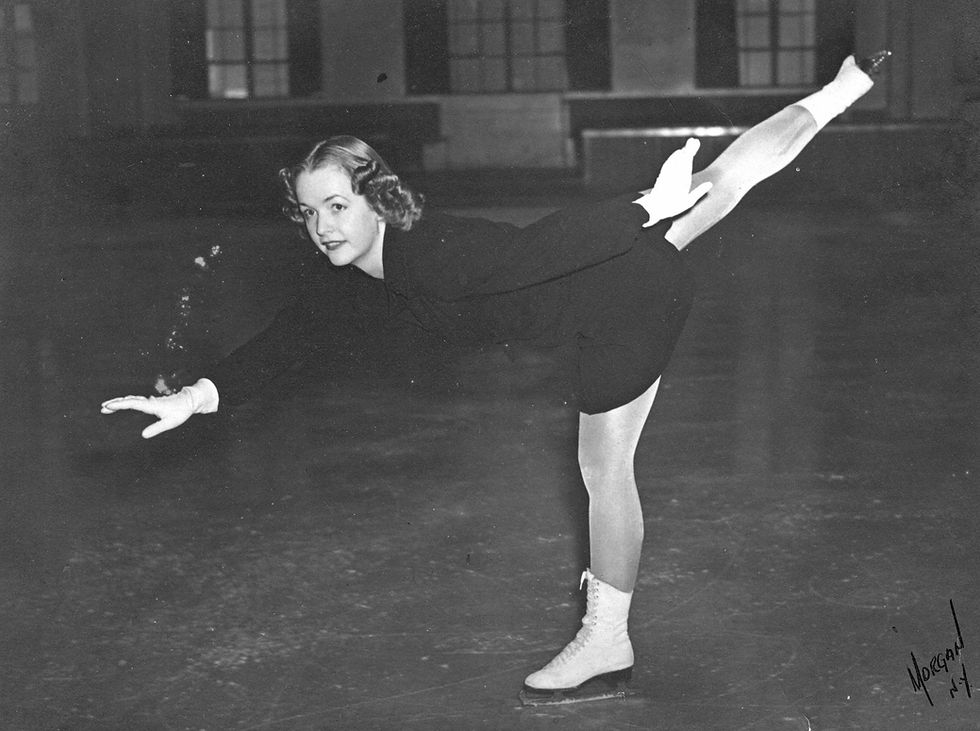
My dad captained the 1939 Massachusetts Institute of Technology hockey team. (I still have the puck from his first college goal.) After college he played for a couple of years for the Plainfield New Jersey Panthers, a semi-pro team much like the Lake Placid Roamers.
All this occurred before I was a twinkle in my parents’ eyes. By the time I came along, as the fourth of five kids, skating was a part of my father’s seemingly long forgotten past. I have vague memories of skating at Locust Valley’s Beaver Dam Club in the 1950s. Unfortunately, they weren’t particularly fond ones. My memory is of a lengthy battle with the skates’ laces that apparently required a degree of strength beyond that of an eight-year-old. By the time I staggered upright, my ankles wobbled like a freshly foaled horse. Still, I stumbled onto the ice, hopeful for success. Within minutes my toes were frostbitten, my hands were immobile and my nose was running like a leaky faucet. We never skated often enough for me to get good at it or get used to the cold.
In 1960 we moved upstate and my youngest sister and I would tramp down to the Canandaigua Outlet which bordered our property and ventured out onto the small frozen river. We tested the ice and once we had faith that we probably wouldn’t drown, we grabbed a shovel and started clearing off the snow. Once a smooth patch was revealed, we dropped onto a convenient snowbank to battle lacing our skates. By this age we could better endure the cold and before we knew it, we were wobbling across the ice to skate along with the other two kids in the neighborhood. Looking back, I don’t know why we never went through the ice because there was no adult supervision, and I don’t know how we determined that the ice was safe in the first place. Unsurprisingly, our skating never improved.
It wasn’t until my college years that I watched enough hockey to learn the difference between icing and offsides…and then came the 1980 Winter Olympics.
Now living in Saranac Lake, a group of high school and college friends joined us for the Olympics. We got tickets for a variety of events including an early round hockey massacre with Canada defeating the Netherlands 10-1.
Everyone knows about the Miracle on Ice…but few remember that the USSR vs USA game was not broadcast live across the country. It was a delayed broadcast. Did we have to watch it delayed? No, we were fortunate to huddle around a 17-inch black and white TV and watch it live — on the Canadian channel.
Little did we know we were about to witness one of the most improbable moments in sports history. The U.S. team, a collection of amateur and collegiate players, faced the Soviet Union, a seemingly invincible machine that had dominated international hockey for decades. The contrast between the teams was stark: the Soviets were seasoned professionals in all but name, polished by years of international play, while the Americans were young, raw, and widely expected to lose by a wide margin. How wide a margin? The best odds you could get on the USA winning were 350 to 1 against. Coming into the Olympics, the Soviet Union hockey team had an extraordinary streak, having won the previous four consecutive Olympic gold medals and were undefeated in Olympic play since 1968.
From the opening faceoff, the tension was electric. When the Soviets struck first, firing a shot past American goaltender Jim Craig, a hush briefly fell over the arena. Yet the silence didn’t last: When the United States answered back with a goal of their own, the crowd erupted, stomping feet and waving flags. Those of us watching at home were just as loud.
As the game unfolded, the Soviets displayed their skill, building a 3–2 lead by the end of the second period. Most of those in attendance and certainly those of us watching on TV felt the dread of inevitability. Still, there was hope. The American players skated with relentless effort refusing to be intimidated. Each defensive stand drew louder cheers from both the crowd and from us as well.
The third period transformed the arena into nonstop noise. When the U.S. tied the game early in the period, the throng exploded in disbelief and joy. People leapt from their seats, and the chant of “U-S-A! U-S-A!” rolled through the building like thunder. When the Americans scored again to take a 4–3 lead, the reaction was explosive. The roar was deafening, a mix of exhilaration and sheer disbelief, as fans realized that the impossible was suddenly possible.
The final minutes felt endless. Every Soviet shot attempt caused thousands to gasp in unison; every American clearing of the puck was met with frantic applause. As the clock ticked down, the crowd began counting the seconds aloud, their voices growing louder and more urgent. “Five! Four! Three…!” When the final buzzer sounded, Lake Placid, the Tri-Lakes, and the country erupted into chaos. People screamed, cried, and waved flags as the American players threw their sticks into the air and embraced one another on the ice.
Broadcaster Al Michaels’ famous question — “Do you believe in miracles?”—certainly echoed the feelings of our household. The sense of hope, pride, and disbelief was unforgettable. The image of goalie Jim Craig draped in the U.S. flag is forever etched into the memory of those of us jumping up and down in front of our TV.
That’s not the end of our Olympic experience, however. Believe it or not it wasn’t even the highlight.
How could that be? You may not know but the Miracle on Ice — was not for the gold medal, that game was two days later against Finland.
My buddies and I were determined to go to the gold-medal game. But how were we to get tickets? We went down to the Petrova field, which was used as an Olympics parking lot, hopped on the bus to Lake Placid (You couldn’t drive your own car there.), and started looking for scalped tickets. Sure enough, we found someone on the street willing to sell us four standing room only tickets.
It was a thrilling affair, to say the least. Over 10,000 people packed into an arena with a capacity of 7,700. And like the previous game, it was constant chaos, the noise was deafening. The U.S. came back from a 2-1 deficit in the third period, scoring three unanswered goals to win the game 4-2 clinching the gold medal. The crowd roared, more flags were draped over Jim Craig, and we filed out of the arena, exalted and grateful to be part of history.

And what was the outrageous cost for the ticket that has allowed me to tell this story for forty-five years?
A Ulysses S. Grant…Fifty bucks.
It seemed like a lot of money at the time, but now in my old age I realize what a great deal it was.


Comments